
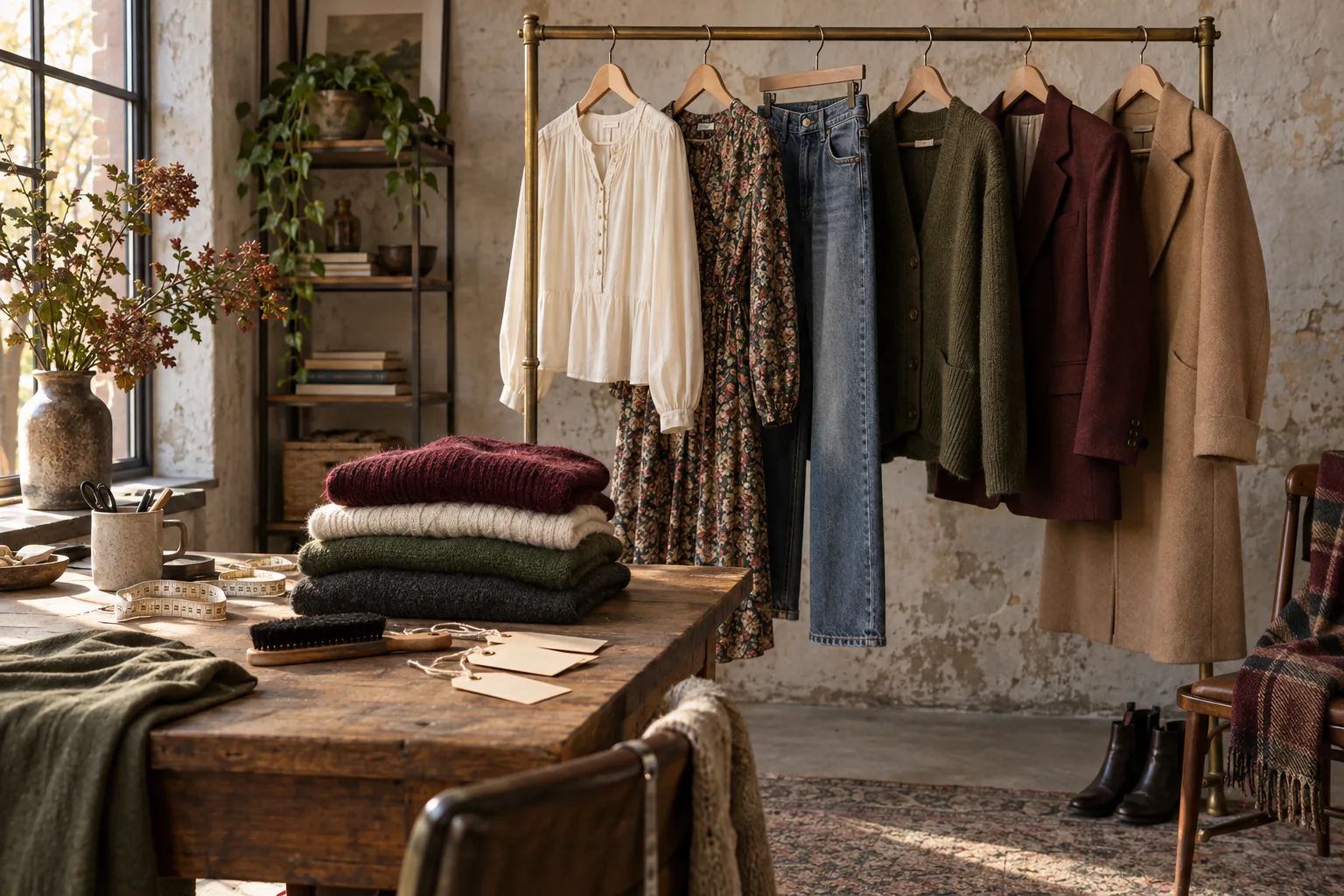
There is always a strange stretch between seasons when the closet stops making perfect sense.
The afternoon still belongs to summer, but the morning asks for a sweater. Sandals remain by the door beside boots that have only recently returned from storage. A lightweight dress feels right at noon, while a jacket becomes essential by dinner.
For a shopper, this uncertainty can be charming. For a reseller, it is a signal that the entire rhythm of the business is about to change.
At Loberry Fashion, a new season does not begin on the first official day marked on a calendar. It begins quietly, several weeks earlier, when different fabrics start catching our attention at the thrift store and the inventory rack begins asking for a new point of view.
Resale Is Always Slightly Ahead of the Weather
Traditional retailers plan their seasons months in advance. Resellers work with a less predictable kind of calendar.
We cannot order twenty units of the perfect autumn jacket or request a sold-out sweater in another size. We work with what appears: one remarkable coat, a beautifully worn pair of boots, an unexpected silk blouse, or a cardigan from a label we have never encountered before.
That uncertainty is part of the pleasure, but it also requires anticipation.
When the weather is still warm, we are already looking for pieces that will make sense when the temperature shifts. A heavy coat may not attract much attention on an August afternoon, but waiting until the first truly cold day to begin sourcing winter clothing would already be too late.
A resale shop has to live in two seasons at once: the one customers are experiencing and the one they are about to need.
The Rack Begins to Change First
The transition usually starts with texture.
Linen and airy cotton slowly make room for denim, corduroy, wool blends, substantial knits, and jackets with enough structure to transform an outfit. Colors become deeper, but not necessarily darker. Olive, burgundy, tobacco, charcoal, cream, and faded blue begin to feel more interesting than they did a few weeks earlier.
Then come the layers.
Button-down shirts, lightweight cardigans, vests, blazers, denim jackets, and overshirts are especially useful during an uncertain season because they do not demand a complete wardrobe change. They allow someone to respond to the day as it unfolds.
That adaptability matters in resale. The most useful seasonal pieces are often not the loudest or the most obviously “autumnal.” They are the garments that can enter a customer’s existing wardrobe without requiring an entirely new one.
A good blazer can sharpen a summer dress. A cardigan can make a favorite tank top last another month. Boots can change the attitude of a floral skirt. The season changes, but the clothes do not have to disappear overnight.
Sourcing Becomes an Exercise in Imagination
Shopping for inventory is never simply a matter of asking whether a piece is attractive.
We have to imagine where it belongs.
Can it be worn immediately, or will it sit untouched for two months? Does it photograph well enough for a customer to understand its texture? Is the material appropriate for the season ahead? Does it complement what is already in the Loberry closet, or would it introduce something genuinely new?
Some pieces make their purpose obvious. Others require a little imagination.
A sleeveless dress discovered near the end of summer might still deserve a place in the shop if it would look beautiful beneath a cropped jacket. A thin sweater may become more useful than a heavy one when temperatures fluctuate throughout the day. A dramatic coat may be worth acquiring early because pieces with real character rarely appear exactly when you begin searching for them.
This is where seasonal sourcing becomes less about following a checklist and more about recognizing possibility.
The best finds often sit somewhere between practical and unexpected.
Condition Matters More as Fabrics Get Heavier
Every season brings its own inspection routine.
Warm-weather pieces often demand close attention to underarms, delicate straps, pale fabrics, and lightweight hems. Autumn and winter clothing introduce different concerns: pilling, stretched cuffs, missing buttons, damaged linings, worn elbows, stubborn odors, and moth damage that may be nearly invisible at first glance.
Knitwear receives particular attention. We check the shape, seams, neckline, and cuffs. We look for small pulls and repairs. We consider whether the fabric can be refreshed without losing its character.
Coats and jackets require an entirely different examination. A beautiful exterior is not enough if the lining is torn or the closures no longer work. Pockets, zippers, buttons, vents, and interior seams all become part of the decision.
A piece can be stylish and still not meet our standards.
One of the quieter realities of reselling is that many garments are left behind not because they lack beauty, but because they would require more restoration than we could confidently complete. Knowing what not to bring home is as important as recognizing a treasure.
The Work Continues After the Thrift Store
A seasonal haul rarely moves directly from a shopping bag to the website.
Every item enters a process.
Pieces are inspected again in better light. Measurements are taken. Care labels are read. Garments are cleaned, steamed, brushed, or carefully refreshed according to their materials. Small flaws are documented rather than hidden.
Then comes photography, which becomes more complicated as the clothing grows larger.
A summer blouse is relatively simple to arrange. A long coat has weight, shape, and proportion that must be communicated clearly. A black sweater may look like a flat shadow unless its texture is photographed carefully. Boots need angles that show the toe, heel, sole, and overall silhouette.
The goal is not merely to make an item look appealing. The goal is to help someone understand what it will be like to own.
Good resale photography should answer questions before they need to be asked.
Seasonal Organization Is Its Own Kind of Labor
Behind the polished listing is the less glamorous matter of storage.
Bulky sweaters take up more room than camisoles. Coats require sturdy hangers. Boots refuse to stack politely. Delicate knits should not hang at all because gravity can distort their shape.
As the season changes, the physical business changes with it.
Inventory has to be reorganized so that newly relevant pieces are accessible. Older listings need to be reviewed. Measurements and condition notes may need another check. Items that have been stored for several months deserve a fresh inspection before they are promoted again.
This is also when the rack reveals its imbalances.
Perhaps there are plenty of sweaters but very few jackets. Maybe the shop has strong neutral basics but needs more color. Sometimes one size range is well represented while another has become noticeably sparse.
The inventory begins to function like an editorial page: every piece is individual, but the collection should still feel considered as a whole.
Buyers Change Their Habits Gradually
Shoppers rarely wake up one morning and replace an entire season.
The change happens piece by piece.
First, someone begins searching for a jacket to wear at night. Then another shopper wants boots that work with dresses and denim. Sweaters begin receiving more attention, followed by holiday pieces, coats, and practical cold-weather layers.
This gradual shift is why transitional items matter so much. They meet people where they actually are rather than where a fashion calendar says they should be.
Resale also gives customers room to experiment without committing to a completely new identity every season. Someone can try a vintage blazer, a stronger print, or an unfamiliar silhouette while still shopping thoughtfully.
There is freedom in choosing one special piece instead of accepting an entire trend package.
Not Every Summer Piece Has to Disappear
Seasonal dressing used to feel more rigid. Summer clothing was packed away, autumn clothing emerged, and the two rarely met.
Now the most interesting wardrobes are often less obedient.
A slip dress can continue into cooler weather beneath a sweater. A lightweight blouse can sit under a wool blazer. White denim does not suddenly lose its purpose after a particular date. A floral skirt can look more grounded with boots and a substantial knit.
We pay attention to this when preparing Loberry inventory.
Instead of dividing everything into strict seasonal categories, we look for pieces with range. The question becomes less “Is this an autumn item?” and more “Can this become part of an autumn wardrobe?”
That small change creates many more possibilities.
The Season Never Arrives All at Once
Running a resale business during a seasonal transition means accepting a certain amount of disorder.
There may be sandals, velvet, linen, and wool on the same rack. One customer is preparing for colder weather while another is shopping for a vacation. A coat can sell during an unexpected warm spell, and a summer dress can find its new owner in the middle of winter.
Resale does not move in a perfectly straight line because people do not live in one.
That unpredictability is one of the things we value most about the work. Every season is shaped not only by trends or weather, but by what we happen to discover and what our customers decide to make their own.
At Loberry Fashion, changing seasons are less about clearing everything away and beginning again. They are about looking at familiar clothing differently, making room for new textures, and recognizing which pieces can carry a wardrobe forward.
The weather may remain undecided for a while.
The rack is already beginning its next chapter.